
History
The Constitutional Court (CC) was created by Constitutional Reform Law No. 17,284 on 23 January 1970 and was formally constituted on 10 September 1971.
As established by Constitutional Organic Law No. 17,997, the CC is a State body that is autonomous and independent of any other authority or branch of government. Its function is to guarantee the supremacy of the Constitution of the Republic (CPR) in matters within its jurisdiction.
In this regard, the Court must ensure both preventive and subsequent constitutional review of legal provisions, as well as of decrees already in force, that may infringe the Constitution. Article 93 of the Constitution establishes the sixteen powers of the Court.
The CC is not an ordinary court and has a specialised jurisdiction, dealing only with the matters established in the aforementioned Article 93 of the CPR.
Throughout its 45 years of institutional history, it has had different compositions, distinct powers and different seats.
History and Evolution of the Constitutional Court of Chile
The Constitutional Court (CC) emerged as a technical and legal response to the need to resolve conflicts of constitutional interpretation between the Executive and Legislative branches. Its history has been marked by the effort to guarantee the democratic rule of law.
Before 1970, the Chilean institutional system lacked an effective mechanism for resolving constitutional disagreements, which led to what was described as a “breakdown of the rule of law” and a “crisis of legality”. As a result, the practice of “miscellaneous legislation” became common, whereby matters unrelated to the core principles of a bill were introduced, along with the excessive use of “decretos de insistencia” (decrees of insistence).
Moreover, although Article 86 of the 1925 Constitution granted the Supreme Court the power to declare the inapplicability of a law, the Court imposed limitations on its own authority, excluding formal defects and matters of public law affecting the powers of the State.
In this context, and under the administration of the President of the Republic, Eduardo Frei Montalva, the creation of a specialised court was promoted through Reform Law No. 17,284, promulgated on 23 January 1970, with the aim of “strengthening the authority and observance” of the Constitution.
First Stage: The Court Established by the 1970 Reform (1971–1973)
This stage represents the birth of the Court as a constitutional body exercising constitutional review over the acts of the Legislative and Executive branches.
Structure and Institutional Composition
In accordance with Articles 78a) to 78c), incorporated in 1970, the Court was structured as an autonomous and independent body with its own legal personality. Its composition consisted of five justices: three appointed by the President of the Republic, with the agreement of the Senate, and two elected by the Supreme Court. The term of office was four years, with the possibility of re-election.
The Constitutional Court was formally constituted on 10 September 1971 under the presidency of Enrique Silva Cimma. This stage ended abruptly following the institutional breakdown of 1973. The CC was dissolved by decree law on 10 November 1973, being described by the de facto authorities as “useless” in the new political context.
During its 18 months of operation, it heard 17 constitutional cases, demonstrating significant constitutional activity.
- Budgetary disputes (cases 1, 4 and 12): the Court established doctrine regarding the “Budget Law”, defining it as an exceptional and temporary law that cannot amend permanent laws or include matters unrelated to its “core purpose” (calculation of revenue and determination of expenditure).
- Disqualification of ministers (Tohá Case, case 3): the Court had to determine whether the appointment of José Tohá as Minister of Defence was valid while he was suspended from his position as Minister of the Interior due to a constitutional impeachment. The ruling reaffirmed the President’s authority to appoint ministers, provided they meet the requirements to serve as members of the Chamber of Deputies.
- Review of regulatory authority: in case 5, the Court upheld a petition against Decree with the Force of Law (DFL) No. 1 concerning the electronic industry, declaring it unconstitutional

Second Stage: Re-establishment and Transition (1981–2005)
The 1980 constituent considered it necessary to re-establish the Constitutional Court originally created in 1970, on the understanding that this body constitutes “an essential pillar of the integrity of the fundamental legal order”. To that end, it was argued that the nature and importance of the function entrusted to the Constitutional Court required that its composition be predominantly legal rather than political, equipping it with magistrates of great moral integrity and professional competence who would therefore constitute the highest guarantee for the country.
In that context, Chapter VII of the Constitution established a Constitutional Court which consists of seven members, appointed as follows:
- Three justices of the Supreme Court, elected by absolute majority in successive and secret ballots.
- One lawyer appointed by the President of the Republic.
- Two lawyers appointed by the National Security Council.
- One lawyer elected by the Senate by an absolute majority of its members in office.
The justices of the Constitutional Court serve for eight years, with partial renewal every four years, and enjoy security of tenure in office.
Likewise, the regulation of the staffing structure, remuneration and personnel statute of the Constitutional Court, as well as its organisation and functioning, was entrusted to a constitutional organic law (Law No. 17,997).
The character of this new Constitutional Court as a constitutionally autonomous body was reinforced by the provision contained in Article 79 of the Constitution, which established that it was excluded from the directive, disciplinary and economic superintendence exercised by the Supreme Court over all courts in the country.
Third Stage: The Contemporary Court (2006 to the Present)
Law No. 20,050, published in the Official Gazette on 26 August 2005, introduced various amendments to the 1980 Constitution, among which those concerning the Constitutional Court stand out and may be summarised as follows:
a)The number of members was increased from seven to ten: three appointed by the President of the Republic, four appointed by the Senate (two freely chosen and two proposed by the Chamber of Deputies), and three appointed by the Supreme Court. Each of these justices serves a nine-year term and is subject to a very strict regime of incompatibilities which, among other prohibitions, includes the prohibition on practising law or holding judicial office.
b)The constitutional organic law of the Constitutional Court regulates its organisation, functioning, staffing structure, remuneration system and personnel statute, as well as the procedures inherent to its jurisdiction.
c)Preventive and subsequent review of the constitutionality of laws was unified within a single jurisdiction, namely the Constitutional Court. For this purpose, jurisdiction to hear and decide actions of inapplicability was transferred from the Supreme Court to the Constitutional Court.
d) The Constitutional Court was granted the power to declare unconstitutional, with general effects, a legal provision that had previously been declared inapplicable, either ex officio or through the exercise of a public action.
e) The possibility was introduced of declaring unconstitutional the rules of court (Autos Acordados) issued by the higher courts of justice (the Supreme Court and courts of appeal) and by the Elections Qualification Tribunal.
f)Mandatory preventive constitutional review was extended to provisions of treaties dealing with matters reserved for constitutional organic laws.
g)The Court’s jurisdiction to examine the constitutionality of supreme decrees was unified in a single constitutional provision, whether they were issued in the exercise of the President’s implementing regulatory power or autonomous regulatory power.
h)The Constitution explicitly established the effect of a judgment of the Constitutional Court declaring unconstitutional a rule of court issued by the higher courts of justice or by the Elections Qualification Tribunal, a decree with the force of law, or a legal provision previously declared inapplicable. In such cases, the provision is deemed repealed as from the date of publication in the Official Journal (Diario Oficial) of the judgment upholding the claim.
Finally, during this stage, progress in gender equality was achieved to an unprecedented degree, as in 2013 Marisol Peña became the first female President of the Court. Subsequently, María Luisa Brahm (2019–2021), Nancy Yáñez Fuenzalida (2022–2024), and Daniela Marzi Muñoz (2024–2026) also served as President. In addition, another milestone occurred in 2025 when, for the first time, the Plenary had a female majority (six women and four men), something that had never previously occurred within the country’s highest judicial offices.
Presidente
Enrique Silva Cimma
1971
-
1973
Presidente
Israel Bórquez Montero
1981
-
1985
Presidente
José María Eyzaguirre Echeverría
1985
-
1989
Presidente
Luis Maldonado Boggiano
1989
-
1991
Presidente
Marcos Aburto Ochoa
1991
-
1995
Presidente
Manuel Jiménez Bulnes
1995
-
1997
Presidente
Osvaldo Faúndez Vallejos
1997
-
2001
Presidente
Juan Colombo Campbell
2001
-
2005
Presidente
José Luis Cea Egaña
2005
-
2007
Presidente
Juan Colombo Campbell
2007
-
2009
Presidente
Marcelo Venegas Palacios
2009
-
2011
Presidente
Raúl Bertelsen Repetto
2011
-
2013
Presidenta
Marisol Peña Torres
2013
-
2014
Presidente
Carlos Carmona Santander
2014
-
2017
Presidente
Iván Aróstica Maldonado
2017
-
2019
Presidenta
María Luisa Brahm Barril
2019
-
2021
Presidente
Juan José Romero Guzmán
2021
-
2022
Presidenta
Nancy Yáñez Fuenzalida
2022
-
2024
From
-
To
Name
Position
Curriculum
The Palace: An Architectural Masterpiece
The origin of the Palace dates back to 1912, when the Caja de Crédito Hipotecario (mortgage credit institution) acquired the old residence of the García Huidobro family, located at 1234 Huérfanos Street. The property was in a deteriorated condition and was demolished in 1913 to make way for the present building, designed by the Chilean architect Ricardo Larraín Bravo and constructed between 1915 and 1920, with the final completion formally recorded in 1926.
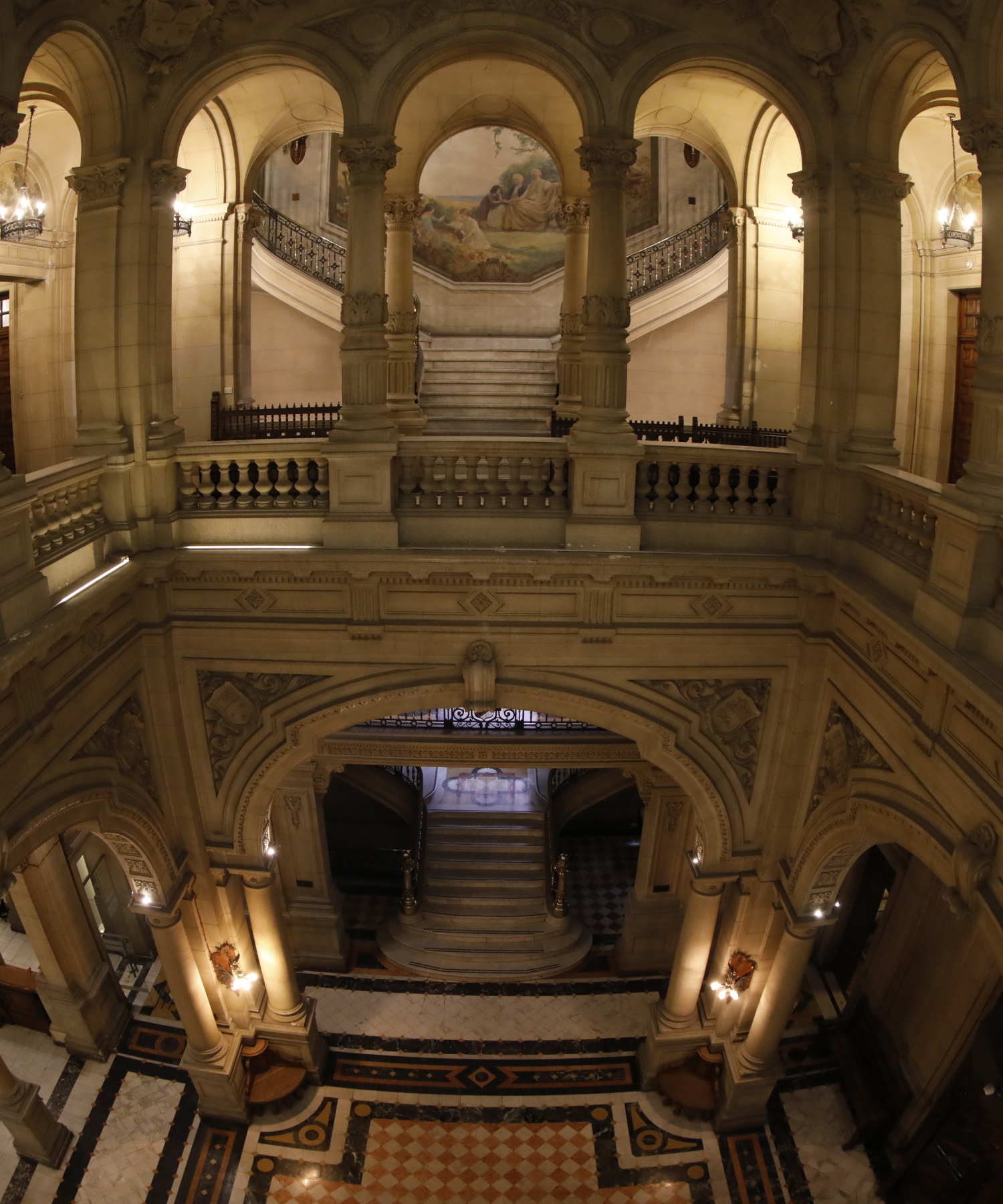
The architectural conception follows the principles of academic architecture in terms of plan composition and the spatial organisation of its interior spaces. However, in the use of materials and ornamental elements, the influence of Renaissance imagery is evident, together with a romantic and eclectic sensibility reflected in the building’s construction.
Moving through the building, one can observe the spaciousness of its interiors, the abundance of natural light, and the predominance of arches and columns. The paintings that adorn the historic structure are the work of the renowned Chilean painter Fray Pedro Subercaseaux, depicting human figures in natural landscapes and in scenes of work and rest.


The building of the former Caja de Crédito Hipotecario reflects the aspirations of a sector of society at the time, consciously conceived to materialise an ideal vision of the future. The space suggests a relationship with the idea of intellectual clarity. For this reason, Larraín Bravo’s hallmark use of abundant natural light, through specially designed windows and stained glass, is a key feature of his work, particularly when viewed from the second floor, where the verticality of the central hall becomes especially evident.


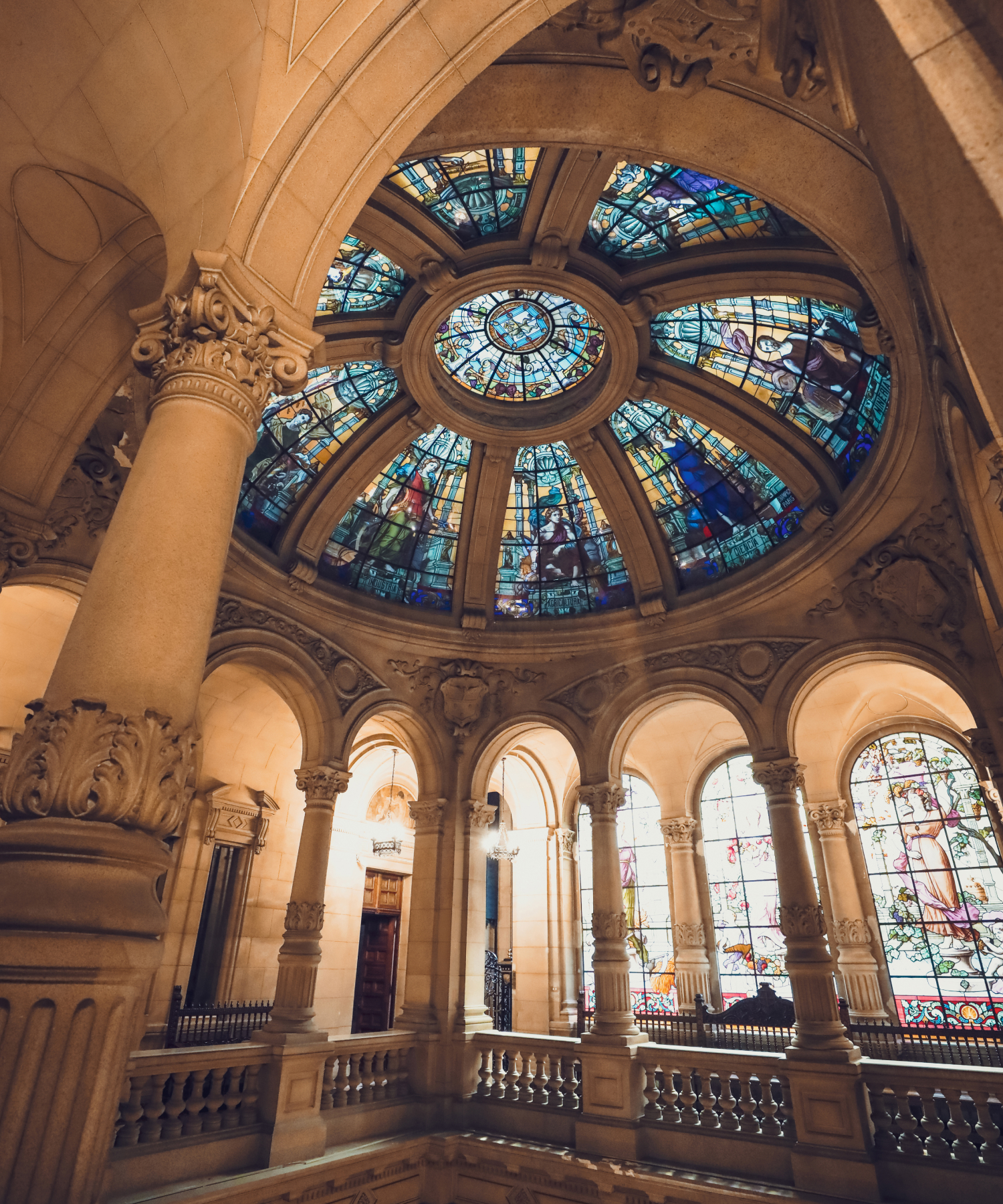

The dome is an essential element in illuminating the central space, complemented by openings that directly or indirectly contribute to the clarity of the interior atmosphere. This allows a clear reading of the architectural elements and spaces that make up the different floors, while also projecting the spatial composition upwards, emphasising its magnificence and symmetrical design.


The decorative paintings and oil works by Pedro Subercaseaux, renowned for his realist style, correspond to what is known as a mural cycle, composed of paintings executed on pieces of canvas painted in oil, a technique commonly used for large-scale works. This technique is based on an analogy with fresco painting, in which the surface appears completely homogeneous. Although the paintings created for the Caja de Crédito Hipotecario are not among Subercaseaux’s most widely known works, they were, in the artist’s own words, among his most accomplished. Within the imagery of these works, a realist artistic treatment can be recognised, consistent with the narratives they seek to convey, in this case, a fable about work and production.


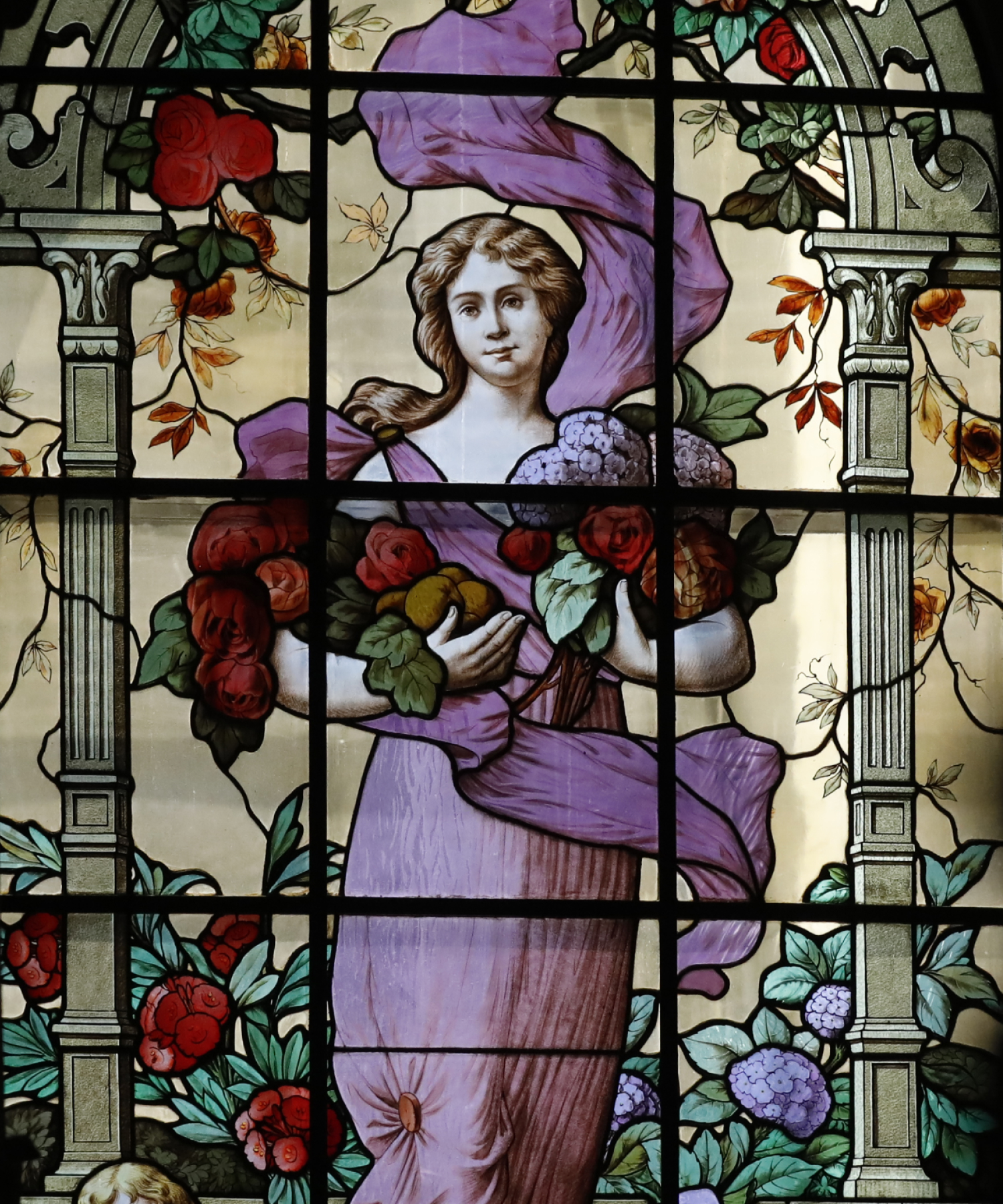
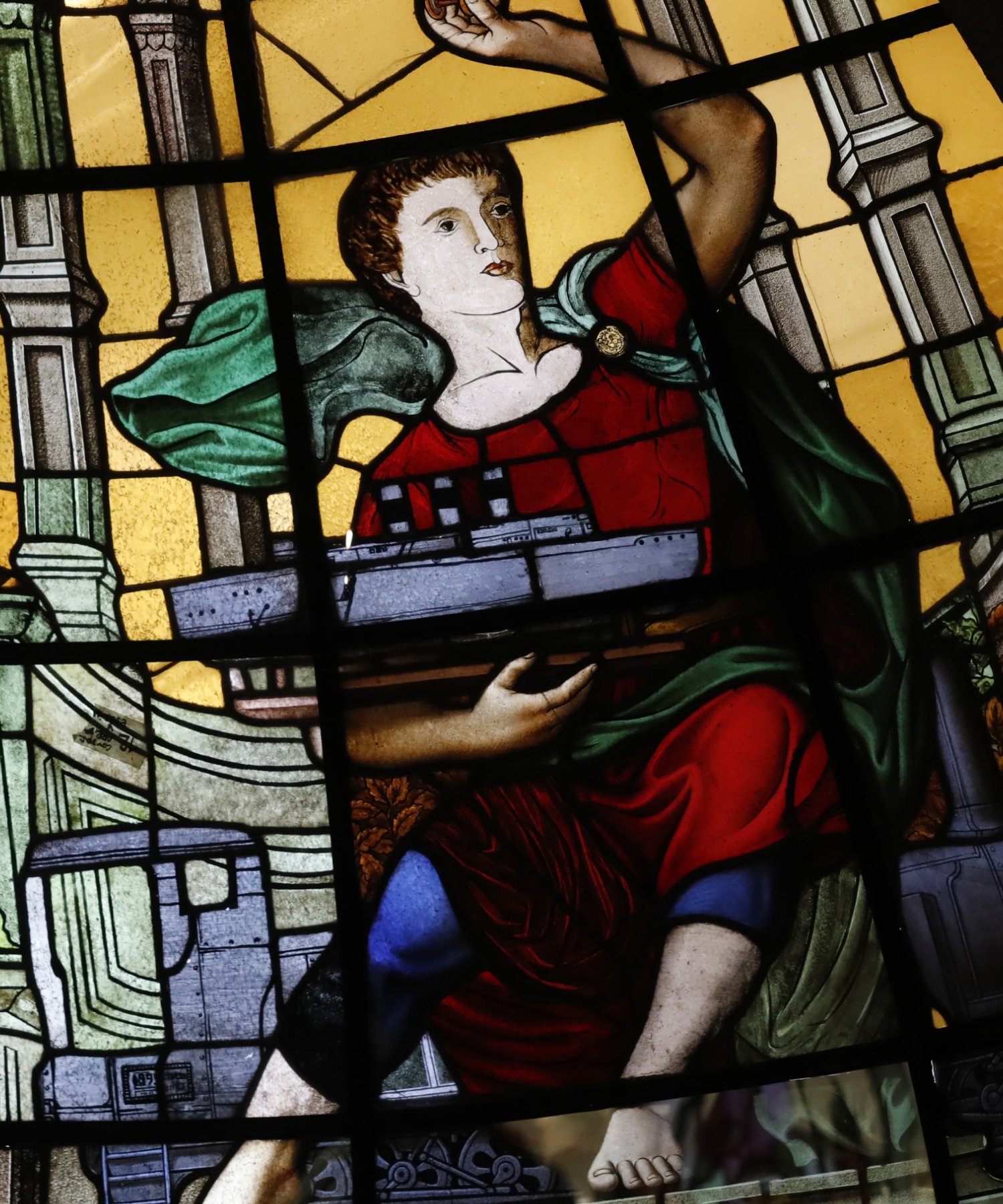
According to experts in stained-glass art in Chile, the Palace contains one of the most significant collections of stained glass preserved in the country and, at the same time, one of the finest representations of the Art Nouveau style, known for its ornamental, decorative, graphic, and promotional character, drawing on elements from European Symbolist painting of the second half of the nineteenth century.
The stained glass of the dome is leaded (using an H-shaped lead profile) and painted with grisaille, enamels, and silver stain. It consists of eight segments and a central circle. Each segment measures 210 × 280 × 60 centimetres and is composed of 15 panels mounted on a structure of iron profiles embedded in reinforced concrete. The central circle measures 220 centimetres and is composed of 13 panels. The dome crowns the main entrance hall, which was the space where the public service counters originally operated.
When observing the dome, eight stained-glass panels can be seen, produced at the workshop of Charles Champigneulle in France. Each of them contains allegorical figures that not only illuminate the hall of the building but also bathe the vestibule in the symbolic light of work and production. The detailed figures representing science, mining, the arts, transport, commerce, savings, industry, and agriculture seek to attract the curious gaze of visitors who wish to explore the symbols of the country’s principal productive activities.
The dome symbolically contains an atmosphere of exchange between all these activities, a convergence radiating from the centre of the dome through a circular stained glass bearing the coat of arms of the city of Santiago. This element is positioned at the centre of the dome and radiates towards the allegorical figures of production through decorative motifs (known as scrollwork), where vegetal and floral forms not only decorate but also explore the functionality of the architectural space. The eight allegories appear as rays of this heraldic sun, reinforced by the yellow background present in each of them, whose radiance illuminates the ambitious project of crystallising the concept of progress and knowledge through the mandate of mortgage credit. In this space, beneath the glass dome, the sun symbolically dies each day and is reborn every morning. Thus, the institutional coat of arms occupies the place of the star and assumes the symbolic role of representing stability.


The allegorical figures in the dome’s stained glass appear in classical poses, sheltered within niches and canopies, alternating between female and male characters with their respective symbolic attributes. The decorative stained-glass cycles throughout the building of the former Caja de Crédito Hipotecario present a paradox, being both anti-academic and academic at the same time, reflecting the eclecticism characteristic of the modernist movements of the period, with a clear prominence of Art Nouveau influences.


On the second floor, the concept of a stained-glass triptych reflects the eclectic character that Larraín Bravo sought to imprint on the entire building. The decorative cycle closest to the observer is a triptych representing the harvest. Its placement allows a dialogue with the paintings of Pedro Subercaseaux, which allegorise the same activities. In contrast to the stained glass of the dome, this triptych places the female figure at the centre of attention. Three young women dressed in vaguely classical attire personify harvesting (left), flower gathering (centre), and the grape harvest (right), almost as priestess-like figures of production in the industrial age. These stylised figures, with distant gazes, accompanied by children and surrounded by floral ornaments, evoke not only the eclectic artistic movements of the turn of the century but also, through their poses and hairstyles, the imagery of magazine illustrations and advertising of the period. It is also interesting to reflect on the distinctive character of the colours, their sobriety and restrained palette, as if deliberately avoiding the exuberance or excesses associated with nature and the perfection of human virtues.
Ricardo Larraín Bravo, the Genius Behind the Palace
During his independent professional practice, Ricardo Larraín Bravo designed several important buildings characterised by a clear eclectic style. Among them are the Iñiguez Palace (1908), inspired by the French Renaissance, and the Church of Los Sacramentinos (1911), whose architecture evokes the Basilica of the Sacred Heart in Paris. However, the more modern direction of his intellectual and professional interests emerged during his stay in France, where he completed a Bachelor’s degree in Science at the University of La Sorbonne in Paris. This experience allowed him to apply reflections on hygienism in urban planning and workers’ housing to the field of architecture, ideas that he later developed in two books: Apuntes sobre casas para obreros en Europa, América y Paris (1900) (Notes on Workers’ Housing in Europe, America, and Paris) and Higiene aplicada a las construcciones (1903) (Hygiene Applied to Construction).
He was also an academic at the University of Chile from 1925 and a member of the Social Welfare Council. At the same time, he participated in institutions concerned with the social issues of the period, such as the Patronato de la Infancia and the Association of Architects of Chile. Although Ricardo Larraín Bravo maintained a lifestyle and an academic and eclectic conception of architecture, dominant and favoured by the oligarchy that prevailed in the upper levels of public administration, although already questioned by 1915, his interests were also connected with emerging social programmes and with a perspective of modernity that anticipated the aesthetic language of his discipline.
